Erasmus+ project ReachOut develops rich educational resources to build school resilience to natural disasters. The project develops learning activities that can be integrated into diverse curricula, such as STEM, sports, arts, language, and social science. Over 70 activities have been developed, and they are openly available to schools for use in diverse contexts.
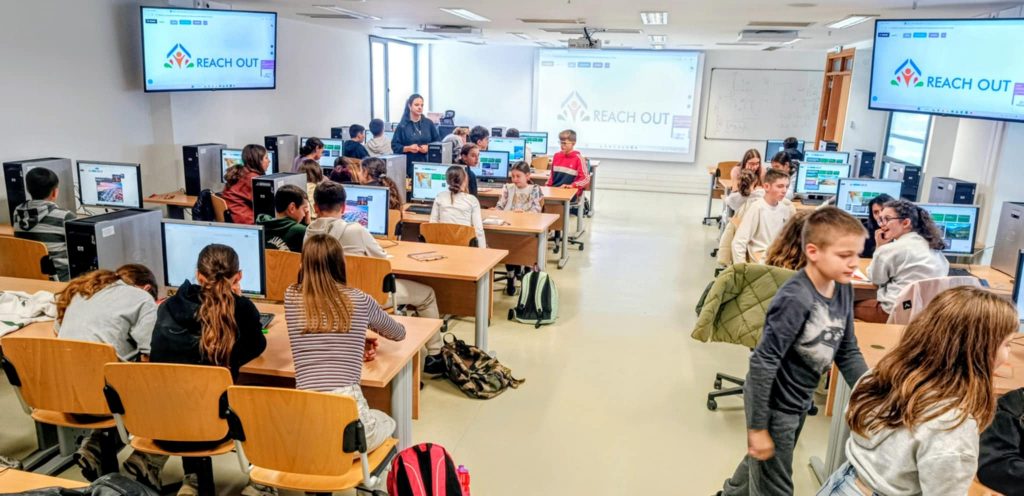
On November 4, 2025, the first piloting activity took place in Greece. 37 students and their teachers from the 1st Gymnasium of Volos visited the Department of Electrical and Computer Engineering of the University of Thessaly and engaged in lessons that help build resilience. The activities took place both outdoors and indoors in the computer lab of the Department of Electrical and Computer Engineering. Students engaged in the following activities.
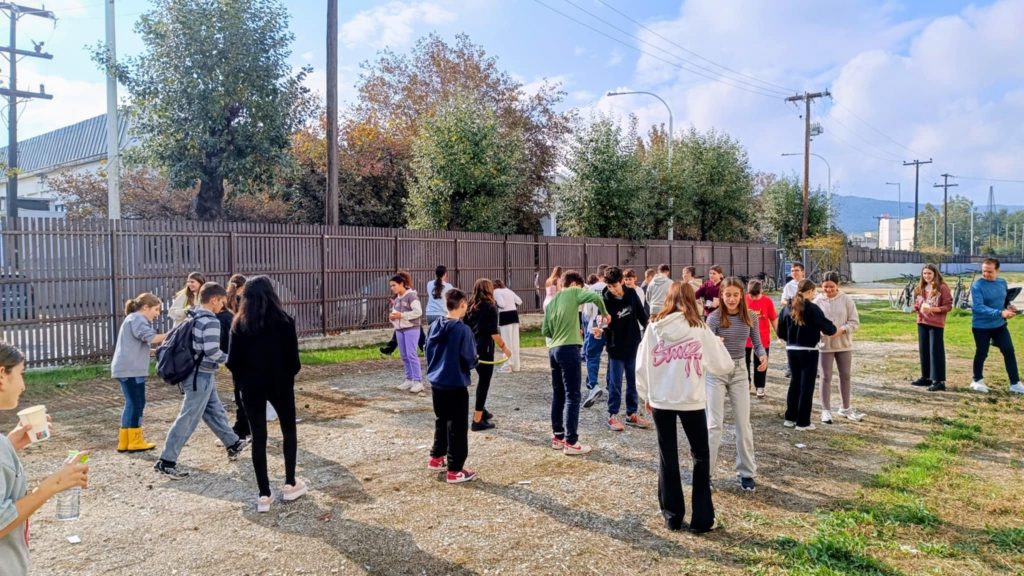
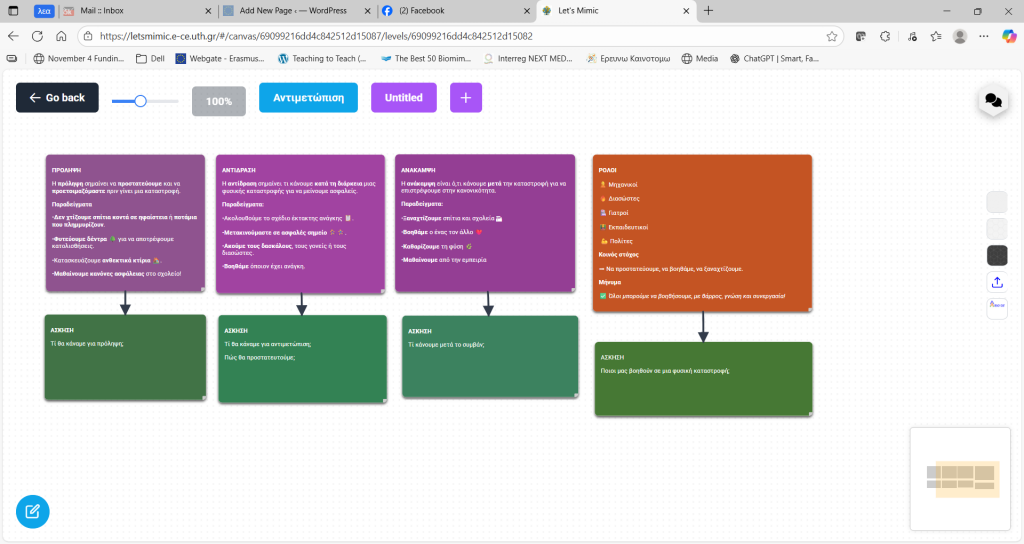
- Circule reflection: First, all students got into a cycle to discuss the concept of natural disasters. What was stressed is the importance of prevention, response, and recovery. Also, students reflected on the importance of helping other and working as a team to overcome hardship.
- Sports: Following this circle discussion, students were exposed to the following scenario: A fire has broken out in our village. Help transport water from the one end to the other by using tools such as paper cups, aluminum foil, hose, plastic bag, coffee filter, sponge, straw, and more. This activity reinforced the importance of teamwork.

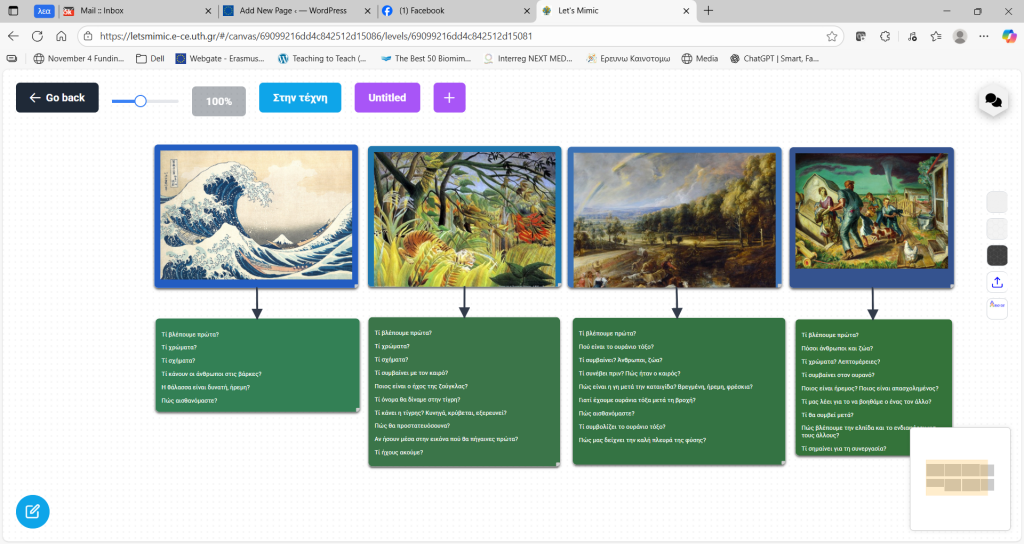
- Art: Students moved to the computer lab. There they were exposed to paintings by famous artists with a theme of natural disasters. Paintings included the Wave (Katsushika Hokusai), Tiger in a Tropical Storm (Henri Rousseau), the Rainbow Landscape (Peter Paul Rubens), and Tornado Over Kansas (John Steuart Curry). Students discussed what they observed in the paintings, colors, what is the threat, feelings, and more.
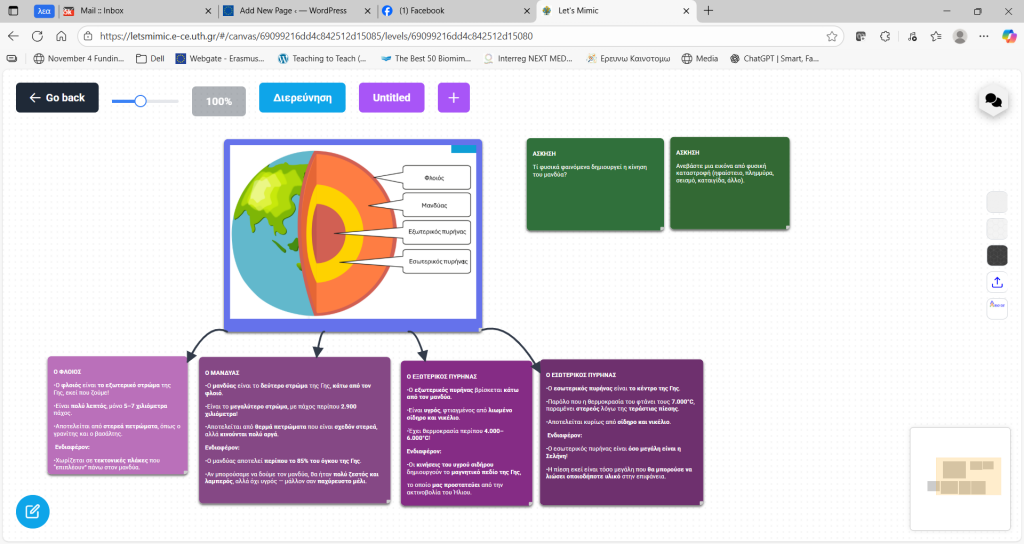
- Science: Students saw a presentation of the Earth mantle and how this contributes to natural disasters such as earthquakes and volcanos.
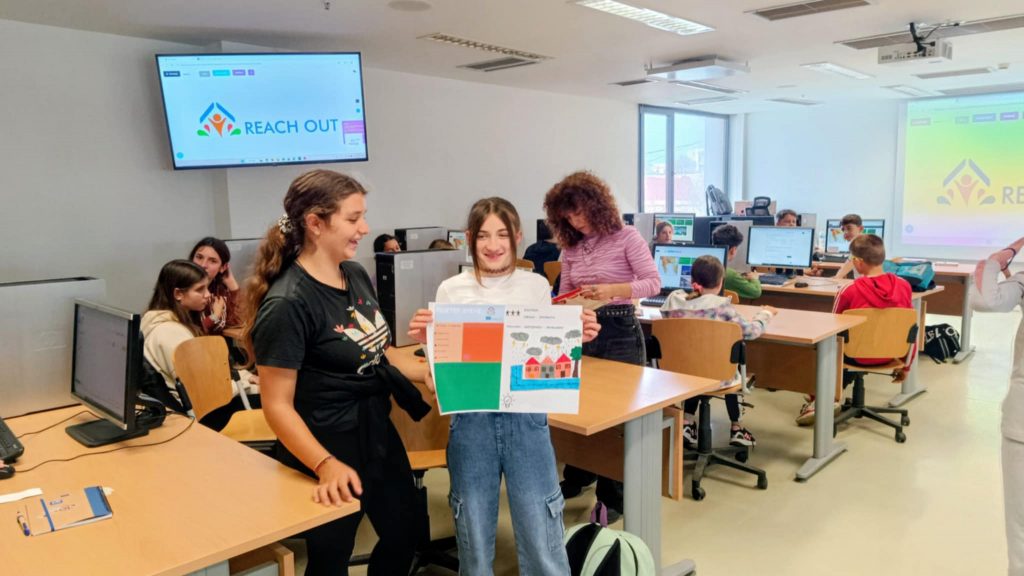
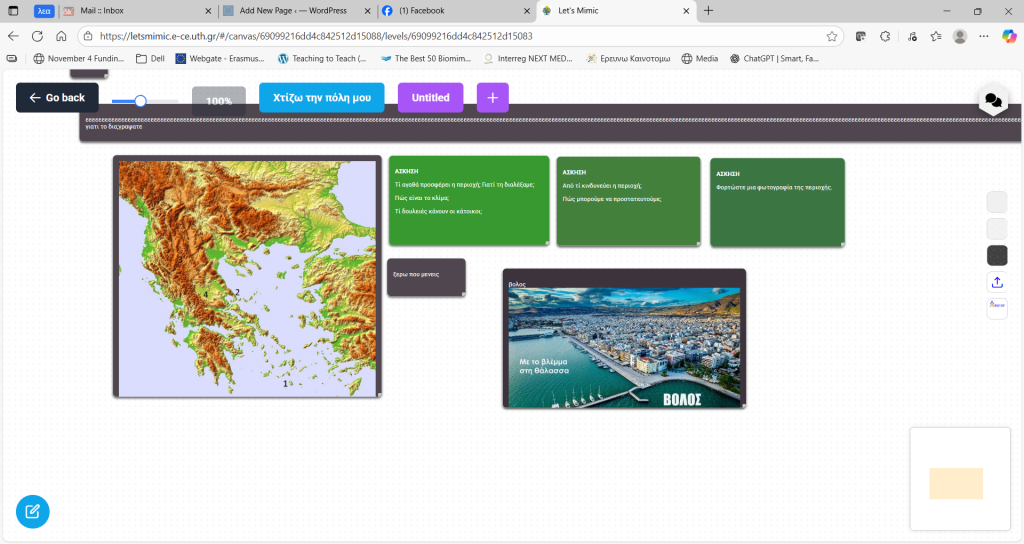
- Social science: Students were given a random card with a location in Greece where they were asked to build a city. The locations included Santorini (volcano), Volos (floods and fires), Pindos mountain (fires and landslides), and the Thessaly plans (floods). They were asked to reflect on what makes these locations attractive for building a city, what resources they offer, what professions inhabitants have. Then, they were asked to reflect on what natural disasters could be faced and how to protect themselves. Students drew their ideas on a poster and presented the results to the class.